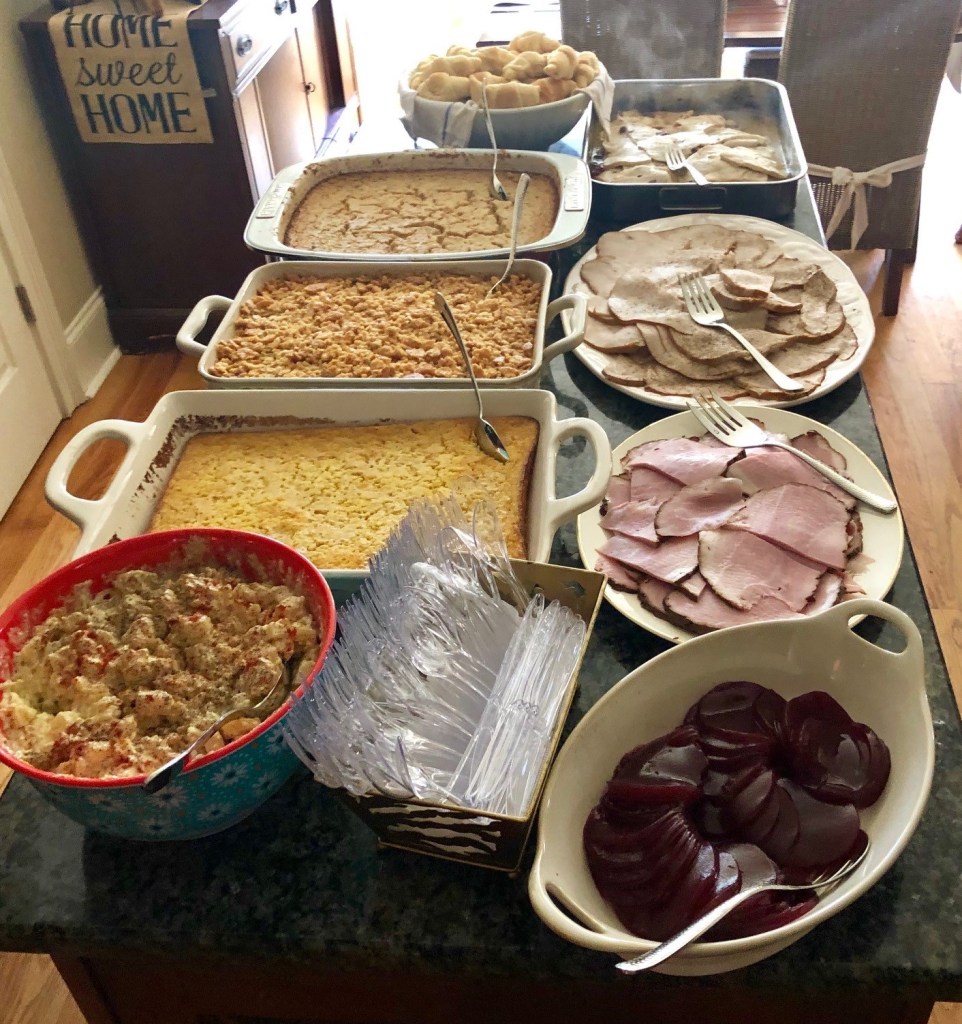
Not everyone likes to cook. For many, they’ve just never had anyone to show them how. Others have tried and been met with little or no success in their own estimation (maybe others too, sorry!!) and have given up…left it to others, or just go out to eat if they want more than a microwave can produce!!
But we may be seeing a rebirth of home cooking…and not too far removed from days of old when families gathered each night, or especially on Sunday after church…and ate home cooked meals all together.
Life has a funny way of coming around full circle. Not too long ago I saw a kid wearing multi-colored striped bell bottom pants…yes, bold, multi-colored striped pants!! Bell bottoms no less!!! Who could ever imagine anyone wearing such a thing?!?!
Well, I used to wear them! You may have too! In fact, I remember begging my Mom to find them and buy them for me! Had to have them…and was so proud when I got them and wore them to school for the first time!!
And here we are…full circle…with pants and hair styles and so many other trends and even music…coming around again!
So often, cultural challenges, war, economic depressions and other sudden and tragic events drive us as a country into activities, relationships and associations, as well as rituals that may have fallen by the wayside, for in some cases, many years or altogether.
Back in 2001, the tragic events of 9/11 drove church attendance to record highs. The wars and conflicts that followed drew many, at least for a moment, into unity and collective support of the military, first responders and others. As a nation, we drew closer together and our faith, our neighborliness…and time around the table with family was once again restored!
In 2020, we once again faced a national crisis that drove these same sentiments and traditions into hyperdrive, with one difference…we had no choice but to stay and eat at home…enter Covid-19!!
The Covid-19 pandemic, tragic in so many ways, also gave rise to renewed interest and the satisfaction and joy associated with feeding those you love and care about!!
So, here’s my message today…good food can in fact be simple…simple goodness!! Dishes don’t have to be complicated, or necessarily expensive to be good!!
For me, eating good food goes like this:
You eat with your eyes first…
Then your nose…how it smells.
And then with taste!!
And when I cook, it’s pretty much the same!
Ingredients need to look good…they need to look like something I or others will want to eat! That isn’t meant to belittle anyone who likes Pig’s Feet…I am sure they can be great (??) but they wouldn’t generally pass my “LOOK TEST” and make it to my menu!
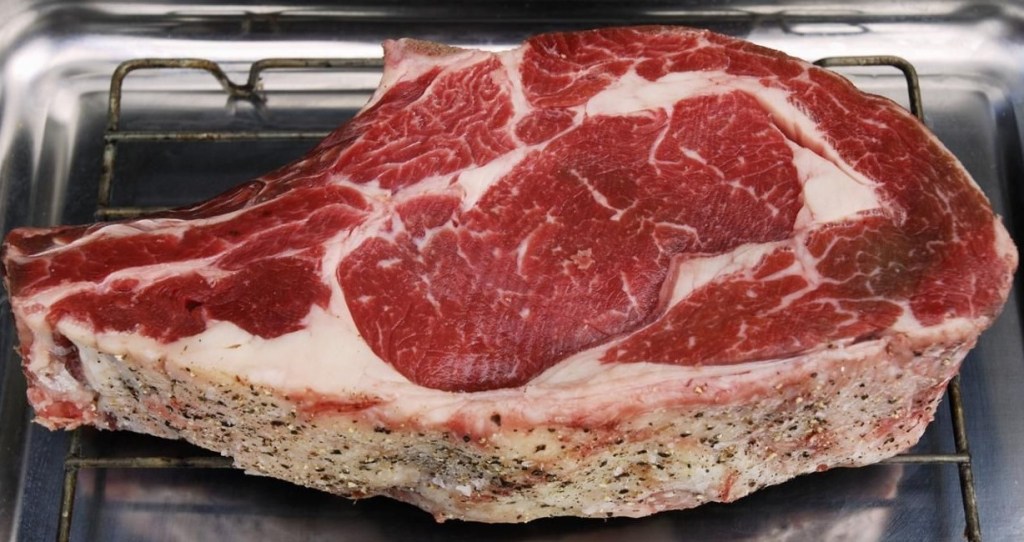
But a marbled Ribeye…or fresh filet of Salmon with its deep orange color and tender texture…fresh Pasta or steaming hot buttermilk biscuits dripping with butter…all those things and many more just look like something you…almost anyone…wants to eat!!
And just for the record…one of the best beef dishes I ever tasted was…Beef Tongue!! Yep, it was!! And I plan to cook it one day! I just won’t be able to tell Sheila in advance…although when I ate it, it was better than the most tender and rich tasting roast beef I’ve ever had…and she loves roast beef!!!
And then there’s smell!! Now for me, smell is almost, if not more important, than either my eyes or taste! This may seem strange to some, but I can often tell if food needs salt, or if certain spices will compliment food or not while I am cooking…just from the smell! And, of course smell is an incredible safeguard as well. Fresh and safe food should have associated aromas just as those foods that are spoiled and unsafe, typically will have aromas that serve to warn us against using them. Now there are exceptions…I think our kids have eaten things over the years while off at college or living on their own that probably would have killed half of a small city, your kids too probably…so again, there are exceptions!! But I probably can’t tell you the number of times Sheila and I have walked into a restaurant to eat, and turned right back around and left. Why? Something didn’t smell right! Whether it was the floors or furnishings or old grease and oils…or smelling that smell of dirty mop water…all of it meant someone didn’t care or no longer paid attention to the little things like smells that can tell you so much about what and where you eat…to keep you safe…or successful as you prepare food for others.
And the biggie: Taste! For those that prepare food for other people, you have the first shot at tasting food…and taste you should, sorry…taste you must!! Watch any cooking show on TV, especially the competition shows and every time, professional Chefs harp on tasting food as you cook.

As I mentioned earlier, my Dad was a cook in the U.S. Army. After he was discharged, he was the Chief Dietician for Kilby State prison in Alabama for 6 years. He oversaw the preparation and serving of 3 meals daily to over 600 prison inmates.
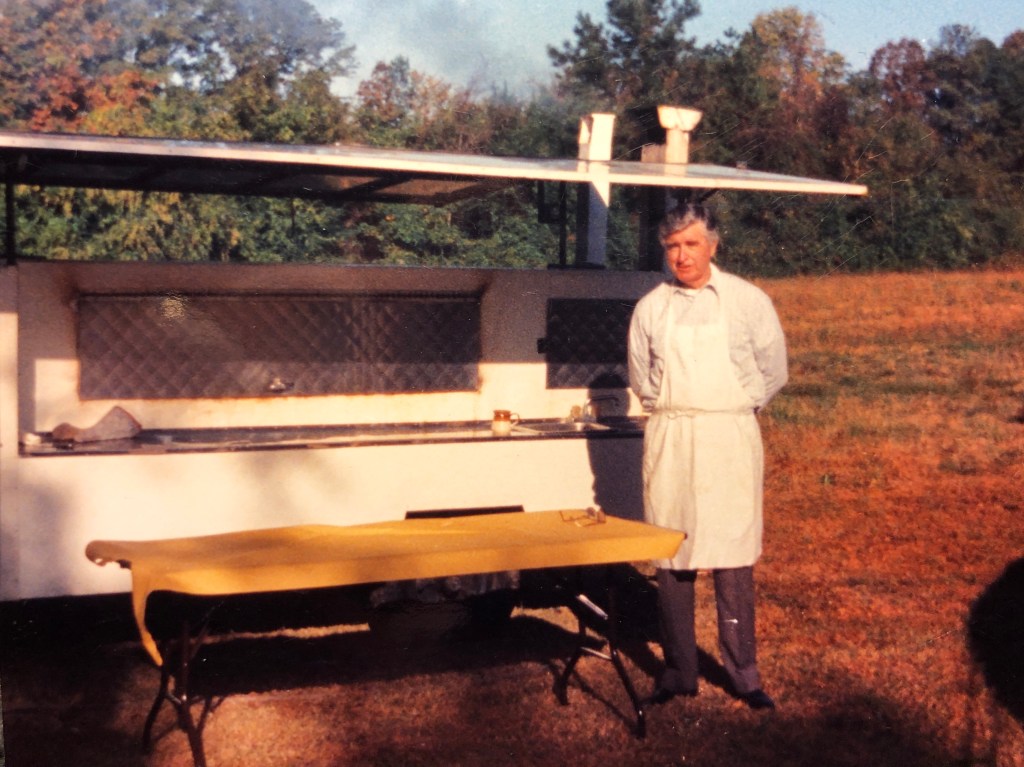
And from that, and his other experience over the years from instituting Wednesday night suppers for much of his church congregation every week, and the feeding of 100’s of teenagers at Bible camps held each summer in Florida, or furnishing Bar-B-Q from his Food Trailer for events and friends, he always said, “If the Cook goes hungry, it’s his own fault!” It was his way of really saying…if you’re going to cook, you have to taste your food!
So, if you can see….although I have cooked a meal or two years ago with both eyes bandaged over, maybe that’s a story for another day…or you have someone who can see for you; and you can smell, or have someone who can smell for you…and you can taste, or have someone that can taste for you, and that may be necessary if you find yourself needing to prepare foods you have sensitivities or allergies to, or possibly another preference such as being a vegetarian and serving meat at a dinner party or other dietary restrictions and medical conditions…the GREAT news is, you can become a cook!!!
One of the simplest and easiest meals that qualifies fully for the title, Simple Goodness, has to be the fresh Salmon filet!
Now you can buy frozen Salmon filets that are already cut into portion sizes, or even seasoned and flash frozen. But there’s really no comparison to serving that fresh portion cut from a larger and unfrozen Salmon filet!
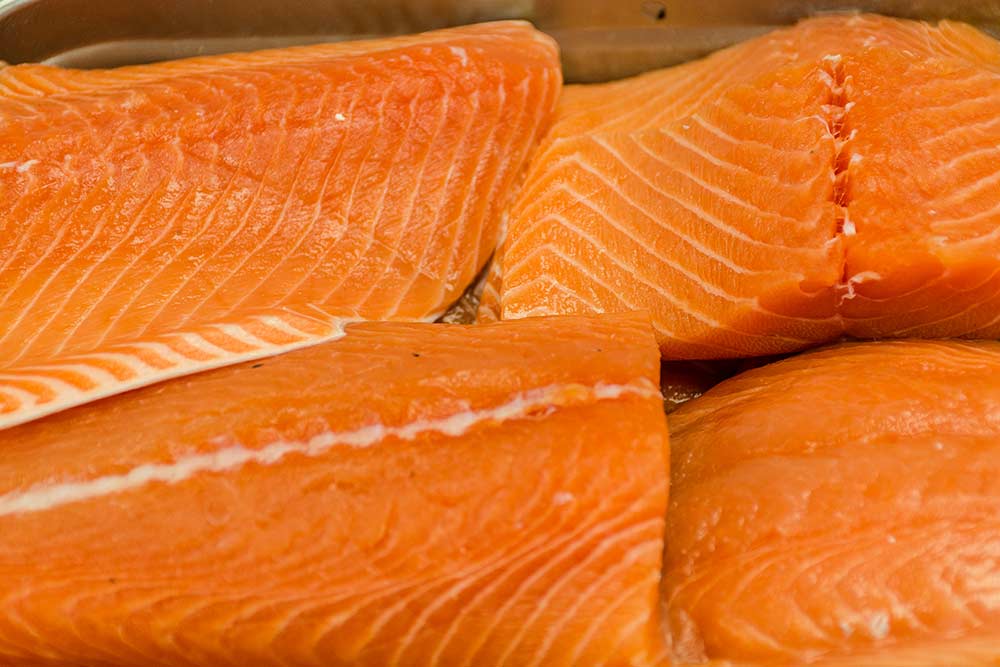
When choosing Salmon for your meal, you may find variations in what you can buy at your local store. There are two main sources to choose from for Salmon and those are Farm Raised or Wild Caught. But there are many species of Salmon, although it’s likely you’ll often have either Atlantic or Sockeye to choose form outside of Farm Raised. Below is some specific and hopefully helpful information about the wide ranging species of Salmon:
King Salmon –
Market Names: Chinook salmon, King salmon, Spring salmon, Tyee salmon, Blackmouth salmon Primary
Primary Source: Alaska, Oregon, California
Season: California, Oregon & Washington troll: April—Sept. Alaska: May—August, winter troll: October—April
Flavor Profile: King salmon have the highest oil content of all five species of wild salmon and are the largest of the Salmon family.
Sockeye –
Market Names: Sockeye, Red Salmon, Blueback Salmon
Primary Source: Alaska, B.C., Washington
Season: May – August
Flavor Profile: High oil content and a stunning bright-red flesh color
Coho –
Market Names: Silver salmon. Silver bullets , Coho
Primary Source: Alaska, B.C., Washington
Season: July-October
Flavor Profile: Coho salmon have a bright red color flesh and is right in the middle on the salmon scale of oil content
Pink –
Market Names: Pink Salmon, Humpies
Primary Source: Alaska, B.C., Washington
Season: July-September
Flavor Profile: Pinks have the lowest oil content of the five Pacific salmon species, and a more delicate, trout-like flavor
Chum –
Market Names: Chum salmon, Fall salmon, Keta salmon, Dog Salmon, Silverbright
Primary Source: Alaska, B.C., Washington
Season: May – November
Flavor Profile: Of the five salmon species, chum is a comparatively paler-fleshed fish, with a lower oil content
Steelhead –
Market Names: Rainbow trout, golden trout
Primary Source: Idaho and Washington
Season: Year-round
Flavor Profile: Trout has a delicate flavor that benefits from milder ingredients
Atlantic Salmon –
Market Names: Atlantic salmon is usually identified by country of origin e.g., Norwegian salmon, Chilean salmon, Scottish salmon
Primary Source: Chile, Canada, Norway, Washington state and Maine Season: Year-round
Flavor Profile: Relatively high in oil content, Atlantic salmon is very adaptable to a variety of cooking methods
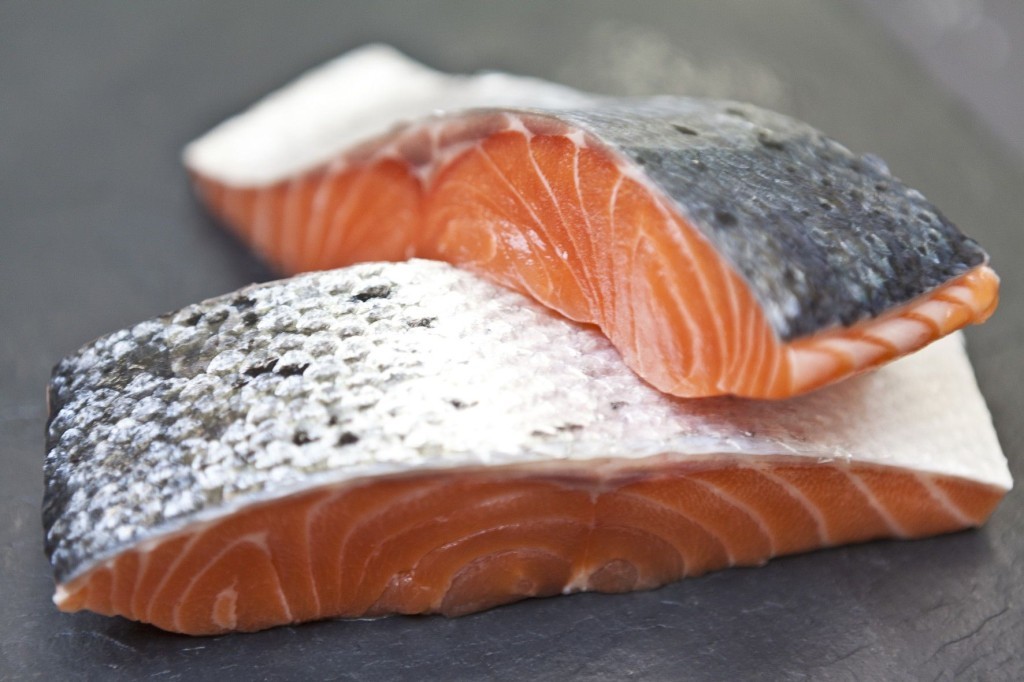
Another option you’ll want to consider is skin on or skin off. For me, I prefer skin on selections. While you don’t typically eat the skin after cooking, the skin on option adds a significant boost to flavor and ease of both cooking and eating without causing the fish to become dry, especially if cooked a little longer than needed or intended.
Typically, wild caught Salmon will be slightly more expensive per pound and farm raised. And prices for different species can vary significantly.
So which is better…wild caught or farm raised?? This is likely one of those things that follow not only personal preference and cost…but emotions can run deep about which is better! Food can do that for some…almost akin to Georgia vs. Georgia Tech, Alabama vs. Auburn, Ford vs. Chevy or Dodge!! And likewise, some don’t consider anything farm raised as an option when wild caught is the next case at the grocery store!
For me, wild caught is better. And truly, the price is usually not that much more. But I also have no problem using farm raised if the selection of wild caught is lacking or happens to be significantly more expensive.
As far as actually selecting your filet, give the filet a poke! Press the salmon fillet with your index finger. The flesh should spring back and not leave an indention from your fingerprint in it.
The flesh should have a bright orange, almost red hue, with nice marbling and there shouldn’t be an overly fishy smell…like you might smell if you walk down to the shore at low tide! Remember, if it smells good…it should eat good!!
From a large filet of Salmon, slice portions crossways. Salmon filets are thick along one long side and much thinner along the opposite long side. using a very sharp knife, I usually slice portions 2 – 3 inches wide at the end of the filet with the thickest meat. As I move toward the thinner end of the filet, I typically slice the last portion or so 3 – 4 inches wide so the same portion weight as near as possible is available for each person. This will also help to balance out needed cook time for each portion despite their sleight differences in thickness.
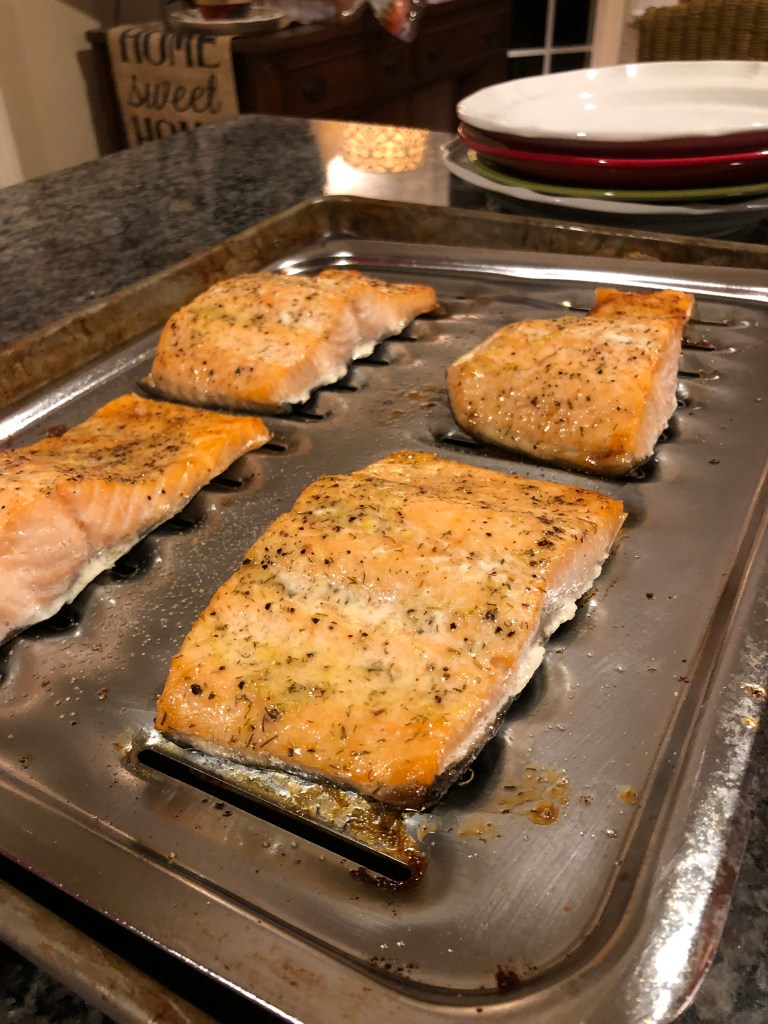
notice the white Albumen seeps from the fish when the filet is done, but remains moist, tender and flaky.
When I roast Salmon, I usually use an oven broiler pan. It’s a good idea to remove the slotted cover and spray the inside of the deeper pan with a cooking spray, as well as the slotted cover. This will help to both avoid sticking and ease clean up. You can also choose to line the deeper, bottom pan with aluminum foil that will catch the drippings and ease cleanup even more!!!
After prepping the pan, lay the portioned Salmon filets out on the pan, spacing them 1-2 inches apart in every direction. This allows heat from the oven to be equally distributed around the filets and even cooking. Depending on the size and quantity of filets, I usually find Salmon is done within that 12-18 minute range.
It’s not unusual for me to mix up a basting liquid for the filets that I will spoon over the filets 1-2 times as they cook. Very often I’ll use melted butter, lemon juice, a pinch of salt and a complimentary seasoning like Dill Weed, Cajun Spice or whatever best partners with your original seasoning of the filets.
Roast the Salmon filets at 400 – 425 degrees for 12-18 minutes. You will notice a thick, white liquid seeping from the filet as it approaches done. This is Albumen (a protein) seeping out and it’s a great indicator you’re entrée is done!! Don’t overcook Salmon! While you can still eat it…you definitely won’t enjoy it as much as a moist, perfectly seasoned and cooked filet!!
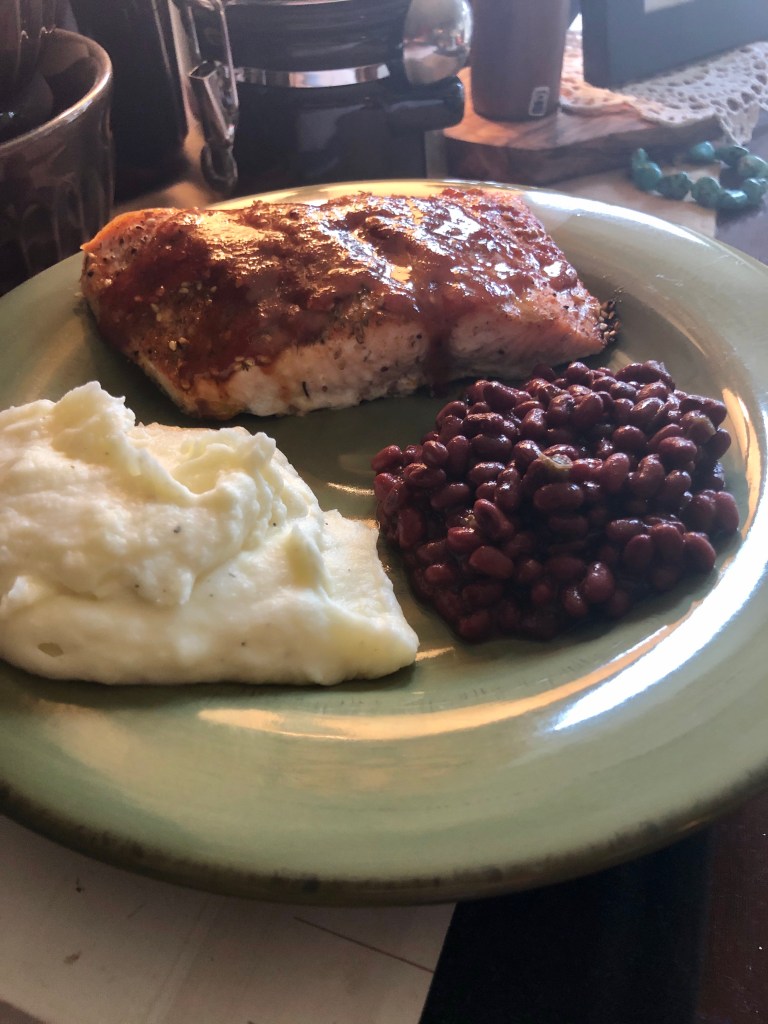
There are a lot of great sides to include with your Salmon meal! Roasted Corn on the Cobb; Pan-Seared Lemon Butter Asparagus; Roasted Red Potatoes with Rosemary & Garlic; Italian Cut Green Beans simmered with Country Ham & Sweet Onions; Roasted Sweet Potatoes with Butter, Cinnamon & Molasses; Cajun Seasoned Wild Rice with diced Tomatoes & Sweet Onions; a loaded baked Idaho Potato; Sweet Baby Carrots…the list goes on and on!
I hope you enjoy a great Salmon Filet dinner soon, but even better, that you’ll enjoy it with family and friends…all the more!!!

